Daily Bubble
- 4.9
- Rating
- 10.00M
- Installs
- Free
- Price
 Analysis by App-foxy
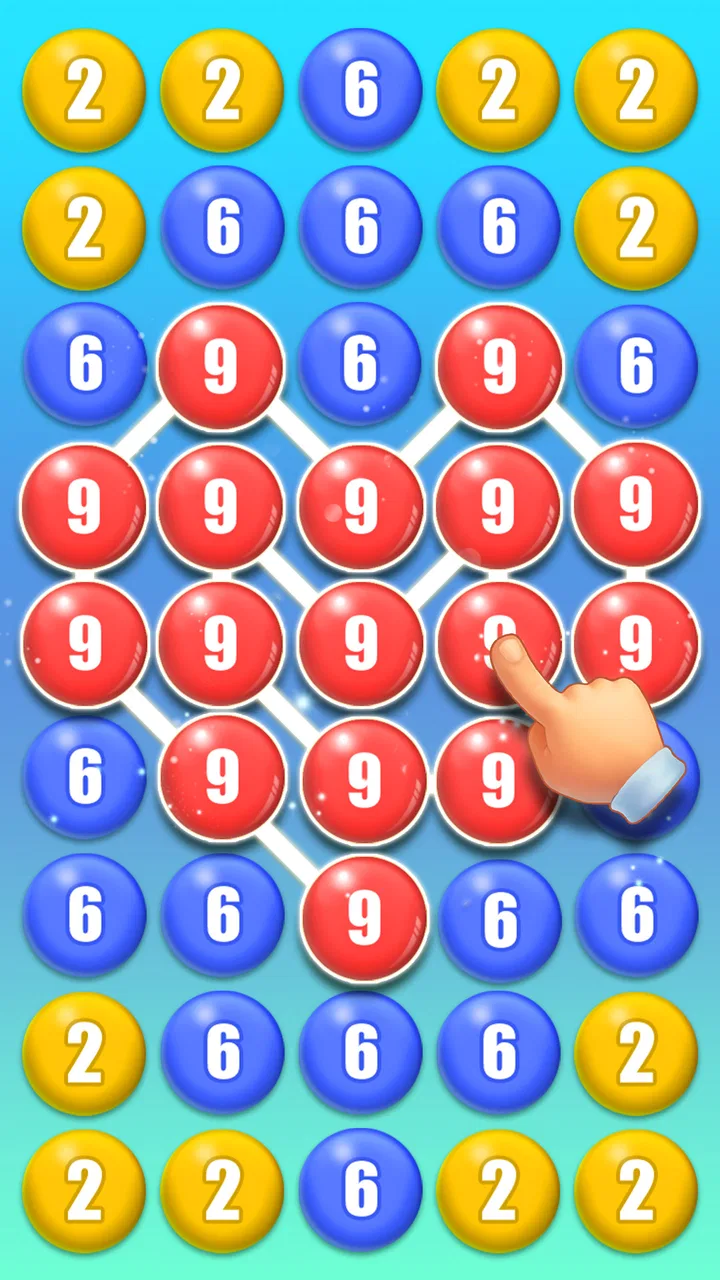
I picked up Daily Bubble expecting a simple way to fill a few spare minutes, and that is exactly where this puzzle game makes the best impression. It comes from Big Cake and focuses on merging bubbles rather than building a complicated world, managing characters, or learning a long list of rules. The result is easy to approach, but it still gives me a small decision to make with every move: should I combine what is available now, or hold back and create a better chain later?
That balance is the reason I can imagine recommending it to someone who wants a calm mobile game instead of a demanding challenge. It is free to start, rated for Everyone, and works on devices running Android 6.0 or later. The game has also reached over 10 million installs, with a 4.9 average from around 68 thousand ratings, so it clearly appeals to a wide audience. Those numbers do not replace personal experience, but they match what I felt during play: this is designed to be immediately understandable.
What to expect when you begin
The central idea is a bubble merge puzzle. You work with matching or compatible bubbles, combine them, and try to keep the play area useful for the next move. There is no need to learn a story, memorize a complicated control scheme, or spend a long time preparing before the first attempt. I found the opening minutes more about recognizing patterns than mastering technique.
You May Also Like

 Blood Strike: 2.5 Anniversary
Blood Strike’s Loadouts Turn Every Drop Into a Tactical Gamble
A close look at Blood Strike’s custom loadouts: how fast access to signature weapons reshapes its battle royale rhythm, rewards preparation, and narrows the gap between fights.

 Pandora - Music & Podcasts
Pandora’s Music Is Easy to Start, but Harder to Recover
Pandora’s strength is its low-effort path from a seed to a station. Its weak spot is how much confidence it asks you to place in connection, setup, and quiet recovery.

 8 Ball Pool
 Is Built on Rivalries, Rematches, and Routine
A close look at the rivalries, rematches, shared routines, and unanswered safety questions that turn a quick pool match into a persistent mobile community.

 Samsung Music
’s Quiet Strength Is Playing What You Already Own
Its reach comes less from spectacle than from dependable access to a personal library. That simplicity is both the app’s strongest retention engine and its ceiling.

 AccuWeather: Weather Radar
AccuWeather Review: A Quick, Clear Forecast for Everyday Decisions
For everyday plans, the best forecast is the one you can understand quickly. AccuWeather makes rain timing, radar, and local conditions easy to act on, with a few trade-offs.

 Hill Climb Racing
Why Hill Climb Racing Still Turns Crashes Into One More Run
A tiny car, a bumpy hill and one more upgrade: Hill Climb Racing keeps resurfacing because its simple chaos makes every near-miss feel personal.
More From Our News Desk
View All News


That simplicity is important because the game’s appeal depends on how quickly it lets you start. A first-time player can understand the basic purpose from the board itself: look at the bubbles, identify a possible combination, and choose where to act. The satisfying part comes from turning several small opportunities into one stronger result without filling the available space too quickly.
I would describe the mood as light and relaxing, but not completely passive. If I played carelessly, the board became harder to manage. If I paused for a moment and considered what the next merge might create, the same layout felt much more manageable. That makes it a better fit for short, thoughtful sessions than for someone who wants constant action or a highly competitive puzzle experience.
The game’s store positioning calls it “Daily Bubble,” and that name fits the way I used it. I could open it for a quick break, make a few decisions, and stop without feeling that I had abandoned a large campaign. It is particularly suitable for waiting rooms, short commutes, or a quiet moment before bed, provided the player is comfortable with a game that asks for gentle concentration rather than instant reflexes.
The first setup is deliberately uncomplicated
After installing it, the most reassuring part is that there is no intimidating learning curve. I did not need to understand advanced tactics before making a first move. The useful approach is simply to look at the board and treat the opening as practice. Instead of trying to achieve a perfect result immediately, I recommend using the first few combinations to learn how the bubbles behave and how much room the board gives you.
Because the game is free, it is easy to try without committing money at the start. There are in-app purchases ranging from $1.99 to $59.99 per item, so I would still advise checking the purchase prompts carefully, especially if a child is using the device. The Everyone rating makes it approachable for a broad audience, but age suitability does not remove the need for sensible purchase controls.
One practical habit helped me more than I expected: I stopped treating every available merge as automatically correct. The first obvious combination may be useful, but it can also remove the flexibility needed for the next turn. Before tapping, I scan the whole board, note the bubbles that are close to forming a larger group, and then choose the move that leaves the most options open.
This is a small adjustment, but it changes the feel of the game. A beginner may focus only on the immediate visual reward of combining bubbles. After a few rounds, it becomes more useful to think in terms of space and future choices. That is where the puzzle gains some depth without becoming difficult to explain.
How to reach the first meaningful success
My advice for a first successful run is to avoid rushing toward the biggest-looking combination. Start with the move that cleans up a crowded area or brings two promising bubbles closer together. The goal is not merely to merge once; it is to create a board that remains workable afterward.
When I followed that approach, success felt less random. I could see why a move helped, even when it did not produce the most dramatic immediate result. This is also a good way to introduce the game to another person. Rather than explaining a long strategy guide, I would say: find a safe merge, watch what it creates, and keep enough room for the next decision.
A useful routine is to divide the board mentally into immediate moves and future setups. Immediate moves are combinations that can be made now. Future setups are bubbles that are not ready yet but could become valuable if left in a sensible position. Protecting those future setups is one of the first non-obvious lessons I took from the game.
Another tip is to use the edges thoughtfully. In a merge puzzle, the outside of the board can feel like a convenient place to push unwanted pieces, but doing that repeatedly may make later combinations awkward. I found it better to keep a clear area available rather than allowing one side to become a storage corner. That gives the next bubble more useful landing possibilities and reduces the chance of a sudden, avoidable blockage.
These choices matter most when the board starts to look busy. At that point, I do not recommend tapping quickly just because a merge is available. A short pause is often enough to notice a better sequence. The game remains relaxing, but the relaxation comes from making controlled decisions, not from ignoring the board.
Where new players can get confused
The main source of confusion is the difference between a move that looks rewarding and a move that improves the whole position. Bright, matching bubbles naturally attract attention, so it is tempting to combine them immediately. Sometimes that is correct; sometimes the better play is to preserve them while arranging another part of the board.
I also had to adjust my expectations about progress. This is not the kind of puzzle where every session needs to end with a spectacular breakthrough. Some rounds are valuable because they teach you how to avoid a cramped layout. A modest improvement in board control can be more useful than one impressive merge followed by several forced moves.
Players who usually choose fast arcade games may find the pace too quiet. The game does not offer the same physical excitement as a reflex-based title, and it is not trying to. On the other hand, people who enjoy traditional match puzzles may find the merge focus more deliberate than familiar match-three play. In a standard match-three game, I often scan for a pattern and act quickly. Here, I spend more time asking what the resulting bubble will do to the remaining space.
That comparison also explains who should skip it. If you want a large adventure, detailed character progression, online competition, or a puzzle built around rapid timers, this will probably feel too narrow. I would choose a richer strategy game when I want long-term planning across many systems. I would choose a classic match-three game when I want quick visual stimulation. Daily Bubble works best in the middle: simple enough for a break, thoughtful enough to reward attention.
Another point worth understanding is the free-to-play structure. The download costs nothing, which makes trying it straightforward, but optional purchases are part of the experience. I would not begin by assuming that spending is necessary. I would first learn the normal rhythm of the puzzle, decide whether the basic loop is enjoyable, and only then consider any purchase that genuinely improves my experience. For a child’s device, I would enable the relevant purchase safeguards before handing it over.
Small habits that make the puzzle easier
My most useful habit was leaving a deliberate “breathing space” on the board. Instead of filling every available position, I tried to maintain one area where a new bubble could be handled without immediately disrupting the rest. This is not a flashy technique, but it made difficult positions less stressful and gave me an escape route when the next move was not obvious.
I also learned to recognize when a chain of moves was becoming too dependent on one specific outcome. If a plan only worked when the next bubble appeared in exactly the right place, I treated it as risky. A stronger position usually offered two or more reasonable follow-up moves. That simple test helped me avoid turning a promising board into a dead end.
For short sessions, I recommend setting a small personal goal instead of playing until frustration appears. I might focus on keeping the board open, improving one previous mistake, or completing a clean sequence of merges. This keeps the game suitable for everyday use and prevents a relaxing break from turning into an unnecessarily tense attempt to force a perfect result.
The game can also work as a gentle shared activity. I could hand the phone to someone who does not normally play games and explain the first decision in seconds. The other person can then make suggestions about which bubble to combine, making the puzzle conversational without requiring a competitive multiplayer system. That makes it a reasonable choice for families, although anyone using it should still be aware of the optional purchase range.
What changes as you become more comfortable
Once the basic controls feel natural, the challenge shifts from identifying a legal merge to managing consequences. I began paying attention to the order of actions, not just the actions themselves. A merge that seems average on its own may be valuable if it clears a route for another combination. Conversely, a large merge can be unhelpful if it leaves the remaining bubbles scattered in awkward positions.
This is where the game becomes more than a one-tap distraction. It remains accessible, but it rewards a player who develops a personal rhythm: scan, predict, merge, and scan again. I found that rhythm more satisfying than simply chasing the largest visible result. It also makes the game easier to return to after a break because the mental process is clear and repeatable.
The current version is 1.0.72, and the game was released on September 28, 2022. For someone deciding whether it is worth installing now, the practical point is that it is an established puzzle title rather than a brand-new experiment. Big Cake has placed it in a format that is easy to understand from the first session, while the large install base suggests that the basic idea has found a substantial audience.
Still, popularity should not be confused with universal appeal. A 4.9 average from around 68 thousand ratings is encouraging, but I would not use that figure as a reason to ignore the game’s limitations. The experience is intentionally focused. If the bubble-merging loop does not appeal to you, there is not a separate adventure or simulation layer waiting to provide variety.
My recommendation after spending time with it
I think Daily Bubble is a good recommendation for someone who wants a free puzzle game that can be understood immediately and played in short, quiet sessions. Its strongest quality is the way it turns a very small rule set into a series of meaningful choices. The first success is easy to reach, but better results come from protecting space, planning one move ahead, and resisting the urge to merge automatically.
I would install it for a parent looking for an Everyone-rated game with approachable controls, for a casual player who enjoys arranging patterns, or for anyone who wants something calmer than an action game. I would be more cautious about recommending it to a player who needs constant novelty, deep progression, or a story-driven reason to continue.
My suggested path is simple: install it, make the first few moves without worrying about perfection, then start watching what each merge leaves behind. Once you begin choosing moves for the next turn rather than only the current one, the game’s real appeal becomes clearer. The best first goal is not the biggest bubble; it is keeping enough room to make a good second decision.
That is why I see this as a pleasant everyday puzzle rather than a disposable time filler. It asks little from the player at the beginning, but it gives back more when you slow down and read the board. The free entry point makes trying it easy, while the purchase options mean I would keep spending decisions deliberate. For me, that combination makes Daily Bubble worth keeping around when I want a compact, thoughtful break without the commitment of a larger mobile game.
FAQs for Daily Bubble
01What is Daily Bubble and how does it work?
Daily Bubble is a casual bubble-shooting game designed for short, relaxing play sessions. You aim and launch colored bubbles to match groups of the same color, clear them from the board, and complete level objectives. As you progress, layouts become more challenging, requiring careful aiming, planning, and sometimes the strategic use of special bubbles or boosters.
02Is Daily Bubble free to download and play?
Daily Bubble can generally be downloaded and played without an upfront purchase. However, the game may include optional in-app purchases for boosters, extra lives, coins, or other helpful items. Depending on the version and device, advertisements may also appear between levels or during gameplay. You should review the store listing and purchase settings before downloading.
03Can Daily Bubble be played without an internet connection?
Many basic levels in Daily Bubble may remain accessible when your device is offline, which makes it suitable for quick entertainment while traveling or when mobile data is unavailable. Nevertheless, certain features—such as advertisements, cloud synchronization, updates, leaderboards, rewards, or in-app purchases—may require an internet connection. Offline availability can vary by platform and app version.
04Does Daily Bubble contain ads or in-app purchases?
Daily Bubble may use advertising and optional in-app purchases as part of its free-to-play model. Ads can potentially provide rewards or appear between stages, while purchases may offer extra boosters, lives, currency, or ad-removal options. These features are not usually required to enjoy the main game, but younger players should use suitable parental controls.
05Is Daily Bubble suitable for children and beginners?
Daily Bubble is generally easy for beginners to understand because its core gameplay relies on simple aiming, matching, and clearing mechanics. Its colorful presentation and short levels can appeal to children and casual players. Parents should still check the current age rating, privacy information, advertisements, and purchase options, since content and monetization features may differ between versions.
Pros
- Simple daily puzzles are easy to start and understand.
- Short sessions fit well into quick breaks.
- Relaxing gameplay offers a low-pressure experience.
- Clean visuals make bubbles easy to distinguish.
- Progress can encourage a consistent daily routine.
Cons
- Puzzle variety may feel limited after extended play.
- Some levels can become repetitive over time.
- Requires regular updates for fresh daily challenges.
- Hints or extra features may be restricted behind ads.
- Offline availability may vary depending on the version.

Daily Bubble
Gallery